503A vs. 503B Pharmacies: What Your Compounded Medication Actually Comes From


You started a compounded weight loss program because it made sense for your life. Then a headline crossed your screen about FDA enforcement and compounding pharmacies.
Maybe you thought: Is my medication still legal? Did something change? Is my program handling this the right way?
These are fair questions. The rules around compounding pharmacies have changed significantly since 2024. And the answer is not simple.
But there is a clear framework for understanding it. This guide explains what 503A and 503B pharmacies are, what changed in 2024 and 2025, and what a legitimate compounded prescription actually requires, so you can ask the right questions and feel confident in where your medication comes from.
Key Takeaways: What to Know About 503A vs. 503B Pharmacies
- There are 2 types of compounding pharmacies in the US: 503A (state-licensed) and 503B (federally regulated outsourcing facilities).
- 503A pharmacies fill prescriptions for 1 specific person, written by a licensed healthcare provider who has determined that medication is appropriate for that individual.
- 503B pharmacies manufacture larger batches of medication for clinics, hospitals, and healthcare facilities, and are subject to federal FDA inspection.
- The FDA removed tirzepatide (December 2024) and semaglutide (February 2025) from its drug shortage list. Enforcement for both pharmacy types followed shortly after.
- Compounding remains a recognized legal pathway under specific conditions, including documented medical necessity and a valid patient-specific prescription.
- Knowing which type of pharmacy your program uses helps you ask better questions and understand your prescription.
Have questions about your compounded prescription? Get Thin MD connects you with licensed health care professionals and Care Coaches to walk you through it.
[BIG CTA GRAPHIC/BUTTON HERE]
What Is a Compounding Pharmacy?
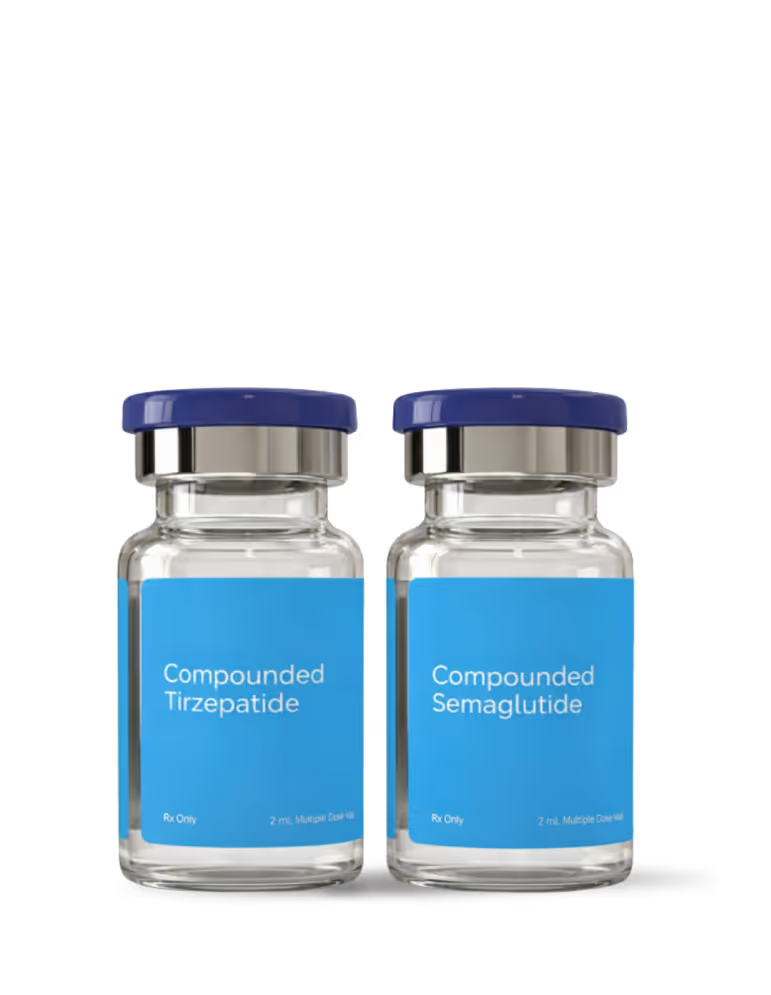
A compounding pharmacy creates a medication tailored to a specific person. It is not a manufacturer making the same drug in bulk for general sale.
Compounded medications have a long history in US medicine. They were common before pharmaceutical manufacturing became standardized. Today, they are used in situations where:
- A person needs a dose that is not commercially available in that strength.
- A person has a documented allergy to an inactive ingredient in the brand version.
- A commercially manufactured drug has been in shortage and supply cannot meet demand.
Compounded medications are not FDA-approved. That means the FDA has not reviewed that specific preparation for safety or effectiveness. However, the compounding process itself is regulated, and the type of pharmacy doing the compounding determines which rules apply and how strict those rules are.
There are 2 types of compounding pharmacies recognized under federal law: 503A and 503B. They operate under different rules, serve different purposes, and understanding the difference matters.
What Is a 503A Pharmacy?
A 503A pharmacy is a state-licensed pharmacy. The name comes from Section 503A of the Federal Food, Drug, and Cosmetic Act.
Its defining feature: 503A pharmacies compound medications for 1 specific person based on a prescription from a licensed healthcare provider.
Here is what that means in practice:
- A licensed healthcare provider evaluates a specific person and determines that a compounded version is medically appropriate for them.
- The licensed healthcare provider writes a prescription for that individual.
- The 503A pharmacy compounds and fills that prescription for that person only.
- The compounding is done in response to a valid, individualized prescription, not in advance, and not in large batches for general distribution.
503A pharmacies are regulated primarily by state pharmacy boards. Requirements vary by state but include licensing, facility inspections, and adherence to quality benchmarks.
503A pharmacies must follow USP standards—quality guidelines set by the US Pharmacopeia, an independent scientific organization that establishes benchmarks for medication quality, purity, and safety.
They are not required to register with the FDA or follow federal cGMP (Current Good Manufacturing Practice) standards. That is a meaningful distinction from 503B facilities.
Medications compounded by a 503A pharmacy are intended for an identified individual. They cannot be manufactured for general sale or shipped across state lines in large quantities.
What Is a 503B Pharmacy?
A 503B pharmacy, also called an outsourcing facility, is a different category created by the federal Drug Quality and Security Act (DQSA) in 2013. This category was designed for larger-scale compounding that falls outside the traditional patient-specific model.
Key characteristics of a 503B outsourcing facility:
- Registered with the FDA: federal oversight, not just state.
- Subject to FDA inspection: the same agency that inspects commercial drug manufacturers.
- Must meet federal cGMP standards: the same manufacturing quality requirements applied to commercially produced drugs.
- Can produce larger batches: sometimes without a patient-specific prescription on file.
- Can distribute across state lines: to licensed practitioners, clinics, and hospitals.
The stricter manufacturing standards at 503B facilities mean more consistent quality control, more documentation, and more federal accountability. In that sense, 503B products carry a higher production standard.
However, 503B compounded medications are still not FDA-approved. They have not been reviewed by the FDA for safety or effectiveness as a specific formulation. Stricter manufacturing addresses how a medication is made, not whether the formulation itself has been evaluated.
What Changed in 2024 and 2025, and What It Means Now
For several years, both 503A and 503B pharmacies were permitted to compound certain GLP-1 medications because those medications appeared on the FDA's official drug shortage list.
When a drug is on the shortage list, compounding pharmacies have broader authority to produce it to help meet patient need that commercial supply cannot fill. That exception applied broadly from 2022 through late 2024.
Then the FDA removed both medications from the shortage list.
Here is the full timeline:
- December 19, 2024: FDA ruled that the tirzepatide injection shortage was resolved.
- February 18, 2025: Enforcement discretion ended for 503A pharmacies compounding tirzepatide.
- March 19, 2025: Enforcement ended for 503B facilities compounding tirzepatide in bulk.
- February 21, 2025: FDA removed semaglutide from its drug shortage list.
- April 22, 2025: Enforcement discretion ended for 503A pharmacies compounding semaglutide.
- May 22, 2025: Enforcement ended for 503B facilities compounding semaglutide in bulk.
- September 2025: FDA issued warning letters to online sellers of compounded GLP-1 medications for misleading advertising.
What this means in plain terms: The broad, shortage-based window that allowed large-scale compounding of these medications has closed. 503B outsourcing facilities producing large batches without patient-specific prescriptions are subject to FDA enforcement.
For 503A pharmacies, the pathway that remains open is much narrower. Patient-specific compounding based on documented medical necessity (where the brand-name product cannot meet that individual's needs) is still a recognized legal framework.
That means the prescription must reflect a genuine, individualized clinical determination. Adding a secondary ingredient without robust clinical justification is not sufficient, based on FDA clarifications issued in 2026.
Note: Court challenges from compounding industry groups are ongoing. FDA guidance continues to be updated. For current information specific to your prescription, your licensed healthcare provider is the right source.
Questions about your prescription or pharmacy? Get Thin MD's care team can help you get answers.
[BIG CTA GRAPHIC/BUTTON HERE]
What a Legitimate Compounded Prescription Requires
Given everything that changed in 2024 and 2025, it is worth understanding what a properly issued compounded prescription actually looks like.
A legitimate compounded prescription starts with a real clinical evaluation. That means a licensed healthcare provider reviews your health history, your current medications, your weight history, and your specific situation to determine that a compounded version is medically appropriate for you as an individual.
That evaluation must be documented. The clinical justification must be specific to you. It cannot simply be a checkbox to unlock access to a medication.
Here is what to look for in a program that handles this properly:
- A licensed healthcare provider reviews your full medical history before prescribing.
- The prescription is written for you specifically, not a generic order.
- The pharmacy filling the prescription is licensed and in good standing.
- The program can answer your questions about which type of pharmacy fills your prescription and why.
- Quality testing is performed on the medication before it is dispensed.
Programs that operate through licensed providers who properly evaluate each individual are working within the framework the FDA has outlined. Programs that skip the clinical evaluation step or obscure where the medication comes from deserve more scrutiny.
How to Know Which Type of Pharmacy Your Medication Comes From
You have a right to know where your medication is compounded. Here is how to find out.
- Ask your program directly. A trustworthy program will tell you whether your prescription is filled by a 503A state-licensed pharmacy or a 503B federally registered outsourcing facility.
- Check your medication label. 503B outsourcing facilities are required to include specific labeling language. The label may include the words 'Outsourcing Facility' or 'Not FDA-Approved.'
- Search the FDA's public registry. The FDA maintains a list of all registered 503B outsourcing facilities on its website at fda.gov. You can look up whether a facility is current and active.
- Ask about the pharmacy's license and inspection history. State pharmacy boards maintain public records of licensed facilities. If a pharmacy is not licensed or has significant inspection findings, that is worth knowing.
Additional quality questions worth asking:
- Does the pharmacy perform independent purity and potency testing on its compounded medications?
- How does the pharmacy handle a recall or quality concern?
- Is the pharmacy licensed in the state where it operates, and in your state if those differ?
It is completely reasonable to ask all of these questions. A reputable program will have clear, direct answers. If a program cannot explain what type of pharmacy fills your prescription or what quality standards it follows, that is worth knowing before you continue.
Questions to Ask Your Licensed Healthcare Provider or Program
Bring these specific questions to your next appointment or conversation with your care team.
Ask: "Is my prescription filled by a 503A state-licensed pharmacy or a 503B federally registered outsourcing facility?"
Ask: "What quality standards does the pharmacy follow—USP standards, federal cGMP requirements, or both?"
Ask: "How has your program adjusted the prescription process since the 2025 FDA enforcement updates?"
Ask: "Is there documentation I can review about the pharmacy's current licensing and inspection status?"
Ask: "What happens to my prescription if the regulatory rules change again, and how will I be notified?"
Why Get Thin MD
A compounded weight loss prescription is only as trustworthy as the program behind it.
Get Thin MD is a national telehealth weight loss program. Every person who starts a program connects with a licensed healthcare provider who reviews their full medical history before any prescription is written.
Your licensed healthcare provider will review your medical history and determine whether treatment is appropriate for you.
Prescriptions are filled through state-licensed pharmacies. Your care team is available throughout your program to answer questions about your prescription, your pharmacy, and what is happening with the regulations.
If prescribed, you'll receive clear instructions and ongoing support from our care team. You are not handed a prescription and left to sort out the details on your own.
When to Talk to Your Licensed Healthcare Provider
Contact your licensed healthcare provider right away if:
- You receive any communication from your pharmacy about a recall or quality concern
- You notice anything unusual about your medication, including its appearance, packaging, or label.
- Your pharmacy stops filling your prescription, changes ownership, or closes.
- You have any questions about whether your current prescription is still appropriate for your situation.
- You experience any side effects or symptoms that concern you.
You should never feel unsure about where your medication comes from or whether your prescription is still valid. Reach out to your care team with any question—that is what they are there for. For full safety details, visit Get Thin MD’s Important Safety Information.
Ready to start a program with a licensed healthcare provider who explains everything clearly? Get Thin MD is here when you're ready.
[BIG CTA GRAPHIC/BUTTON HERE]
The Bottom Line
503A and 503B pharmacies both produce compounded medications, but under very different regulatory frameworks and with different levels of federal oversight.
The 2024 and 2025 FDA enforcement changes closed the broad shortage-based compounding window for both tirzepatide and semaglutide. What remains open is a narrower, documented medical necessity pathway requiring a valid, individualized prescription from a licensed healthcare provider.
Understanding which type of pharmacy fills your prescription, and how your clinical evaluation was conducted, is not a technical detail. It is part of knowing what you are taking and why you can trust it.
Important Safety Information
Get Thin connects customers with licensed providers who may prescribe medication through state-licensed pharmacies. Prescription medication only available if prescribed after an online consultation, as applicable, with a healthcare provider. Physicians may prescribe compounded medications as needed to meet medical necessity or drug shortages. The FDA does not review or approve any compounded medications for safety or effectiveness. Results may vary. Please visit getthinusa.com/important-safety-information for important safety information.