What Is Estradiol and Why Do Some Women Need It?


You wake up sweating at 3 a.m. again. Your sleep is broken. Your mood shifts. Your weight feels harder to manage than it ever did before.
These changes are real. And for many women, they start with one thing: a drop in estrogen.
Estradiol is the main type of estrogen your body makes. When levels fall during menopause, a lot of things can change. But these changes are often hard to explain.
This post breaks it down simply. What estradiol is, how it's used, and what symptoms it may help with.
Key Takeaways: What Women Need to Know About Estradiol
- Estradiol is the main form of estrogen in premenopausal women and a common option used in menopause hormone therapy..
- Levels drop during menopause, which can cause many common symptoms.
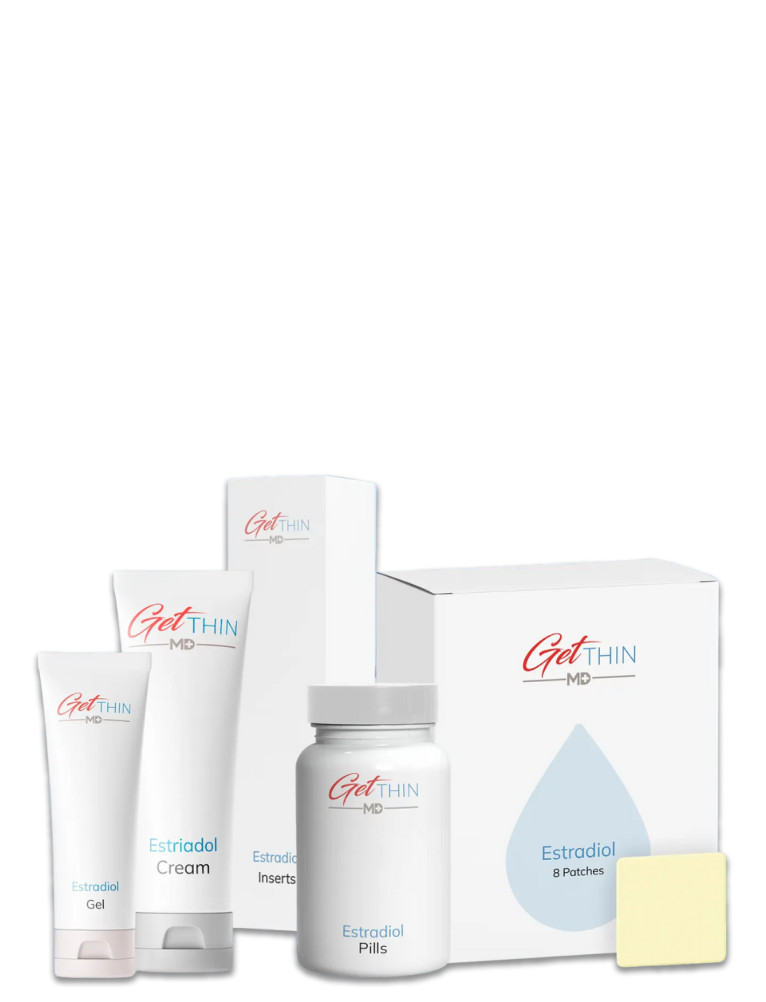
- Estradiol therapy comes in several forms: patch, gel, pill, and more.
- It may help with hot flashes, sleep disruption, vaginal symptoms, mood changes, bone loss, and changes in body weight.
- It is not right for everyone, and a licensed healthcare provider should review your health history first.
Find out if hormone therapy may be right for you. Start here.
[BIG CTA GRAPHIC/BUTTON HERE]
What Is Estradiol?
Estradiol is a type of estrogen, a hormone made primarily by the ovaries.
There are 3 types of estrogen in your body: estradiol, estrone, and estriol. Estradiol is the main and most potent form.
During your reproductive years, estradiol helps regulate the menstrual cycle. It also helps support normal function in the brain, bones, heart, and skin.
During perimenopause and menopause, the ovaries make less and less estradiol. That drop contributes to many of the common symptoms women notice.
How Is It Different From Other Estrogens?
The three main estrogens have similar roles, but they vary in strength or potency.
- Estradiol (E2): the most potent and the main estrogen during reproductive years.
- Estrone (E1): less potent. Becomes the main estrogen after menopause.
- Estriol (E3): the least potent. Mainly produced during pregnancy.
When doctors talk about estrogen therapy, they often mean estradiol. It is the form most studied and most commonly used in hormone replacement therapy.
Some therapies use conjugated estrogens, which are a mix of estrogen types. Your licensed healthcare provider can help you understand which option may be right for you.
How Is Estradiol Delivered?
Estradiol comes in several forms. Each one delivers the hormone differently.
- Patch (transdermal): Worn on the skin. Changed once or twice a week. A commonly used and well-studied option.
- Gel: Applied daily to the skin, usually the arm or leg.
- Pill (oral): Taken by mouth daily.
- Cream or lotion: Applied to skin. Often used for vaginal symptoms.
- Vaginal ring: Inserted vaginally. Stays in place for up to 3 months.
- Spray: Sprayed on the forearm daily.
The patch and gel are absorbed through the skin rather than passing through the liver first. This means the body can absorb them more directly. Some research suggests this may be associated with a lower risk of blood clots compared to the pill form.
What Symptoms May Estradiol Help With?
Estradiol therapy does not work the same for everyone. Results vary. But here are the symptoms it is often used to address:
- Hot flashes and night sweats: One of the most studied uses of estradiol. Many women report less frequency and intensity.
- Sleep problems: Night sweats disrupt sleep. Treating them may help you rest better.
- Vaginal dryness: Estrogen helps keep vaginal tissue healthy. Low levels can lead to dryness and discomfort.
- Mood changes: Some women report more anxiety or low mood during menopause. Estradiol may play a role in mood stability.
- Brain fog: Trouble concentrating is common in perimenopause. Some women report improvement with hormone therapy.
- Bone loss: Estrogen helps protect bone density. Loss of estrogen can speed up bone thinning after menopause.
- Weight and metabolism changes: Many women notice changes in weight, especially around the belly and abdomen, during menopause. Estrogen loss may contribute to this shift.
The connection between estrogen, weight gain, and metabolism is real but complex. Estradiol therapy may support weight management as part of a broader plan, but it is not a weight-loss treatment on its own. Results vary, and individual response depends on many factors.
Wondering if your symptoms could be hormone-related? Talk to a licensed healthcare provider today.
[BIG CTA GRAPHIC/BUTTON HERE]
What Are the Risks of Estradiol Therapy?
Hormone therapy is not right for everyone.
There are real risks to be aware of. Your licensed healthcare provider will weigh the potential benefits against your symptoms and health history.
Possible risks include:
- Blood clots (some research suggests the patch or gel may carry a lower risk than oral pills)
- Stroke (risk varies, and it may be higher with age and other health factors)
- Breast cancer risk (risk may depend on the type of therapy, dose, and duration)
- Heart disease (timing may matter, and starting therapy closer to menopause may carry different risk than starting later)
The "timing hypothesis" is an important concept in this area. The Menopause Society (NAMS) explains the current guidance on hormone therapy timing and risk.
Women who should not use estradiol therapy include those with:
- A history of breast cancer or certain other cancers
- A history of blood clots or stroke
- Unexplained vaginal bleeding
- Certain liver conditions
This is why a full review of your health history is required before starting. You should never start hormone therapy on your own.
When to Talk to Your Licensed Healthcare Provider
If you are in perimenopause or menopause and your symptoms are affecting your daily life, it is worth talking to a licensed healthcare provider.
You do not have to just push through it.
Here are questions to bring to your appointment:
- Ask: "Could my symptoms be related to estrogen changes?"
- Ask: "What form of estradiol would be best for my situation?"
- Ask: "What are the risks for someone with my health history?"
- Ask: "How long would I need to use it? What would we monitor?"
At Get Thin MD, a licensed healthcare provider will review your full health history before any treatment is considered. See our Important Safety Information page for full safety details.
Why Get Thin MD
Get Thin MD takes a whole-person approach to women's health.
Here is what you get:
- A licensed healthcare provider who reviews your health history
- Care Coaches for ongoing support throughout your journey
- A free consultation with a Registered Dietician to help with nutrition and lifestyle
- 24/7 support by chat or phone
- Transparent pricing. The price does not go up just because your dose does. No membership fees.
- Discreet, US-based telehealth access
We know many women feel dismissed when they bring up menopause symptoms. You deserve care that listens.
Ready to feel like yourself again? See if you qualify—it only takes a few minutes.
[BIG CTA GRAPHIC/BUTTON HERE]
The Bottom Line
Estradiol is one of the main estrogens your body makes. When it drops during menopause, symptoms can follow. Hot flashes, sleep problems, weight shifts, brain fog—these are real symptoms that can be linked to declining estrogen.
Estradiol therapy may help. But it is not for everyone, and it is not a one-size-fits-all fix. A licensed healthcare provider needs to review your health history first.
If you have been struggling with menopause and postmenopausal symptoms and are not sure where to start, Get Thin MD is here to help.
Important Safety Information
Get Thin connects patients with licensed providers who may prescribe medication through state-licensed pharmacies. Prescription medication only available if prescribed after an online consultation, as applicable, with a healthcare provider. Physicians may prescribe compounded medications as needed to meet medical necessity or drug shortages. The FDA does not review or approve any compounded medications for safety or effectiveness. Results may vary. Please visit https://www.getthinusa.com/important-safety-information for important safety information.