What Is NAD+ and Why Are People Adding It to Their Routine?

You've probably seen NAD+ pop up on social media, in wellness newsletters, and in supplement ads.
Everyone seems to be talking about it. But most people can't explain what it actually is.
That's where we come in. This post breaks down NAD+ in simple terms: what it does, why it matters as you age, and what the research actually supports.
Key Takeaways: What to Know About This Anti-Aging Treatment
- NAD+ is a molecule your body makes naturally, and it plays a role in energy and cell repair.
- NAD+ levels tend to decrease with age, which is why researchers are studying it closely.
- Some people use it to support energy, focus, and healthy aging (but results vary).
- Talk to a licensed healthcare provider before starting any new treatment.
Curious about NAD+ and other anti-aging treatments? See if Get Thin MD is right for you.
[BIG CTA GRAPHIC/BUTTON HERE]
What Is NAD+?
NAD+ stands for nicotinamide adenine dinucleotide. It's a mouthful, but the idea is simple. NAD+ is a molecule found in every cell of your body.
Think of it as a tiny helper that keeps your cells running. It helps turn food into energy, supports DNA repair, and plays a role in how your cells age.
Without NAD+, your cells can't function properly—it’s critical for cellular energy production and helping maintain healthy cell function.
Why Does NAD+ Fall With Age?
Here's what makes NAD+ a big deal in the aging conversation.
Your body's NAD+ levels tend to decline as you get older. Some studies suggest levels can drop by 50%between your 40s and 60s.
Researchers think this decline may be linked to:
- Less energy production in cells
- Slower cell-repair processes
- Increased inflammation over time
- Changes in metabolism
A review from Nature Reviews Molecular Cell Biology found that declining NAD+ is connected to many signs of aging, including fatigue, muscle weakness, and cognitive changes.
This is why NAD+ has gotten so much attention in anti-aging research. Scientists are still learning, but the early findings are promising.
What Do People Use NAD+ For?
People are using NAD+ for several reasons. Here's what we hear most often:
- Energy and focus. Many people report feeling more alert or less fatigued when using NAD+.
- Healthy aging. NAD+ is involved in cellular repair and energy production, which are important in how cells age..
- Recovery. Some people use it after illness, stress, or significant weight loss.
- Metabolic support. Early research suggests NAD+ may play a role in how the body manages blood sugar and fat metabolism.
Some people also pair NAD+ with GLP-1 weight loss treatments, especially if they notice fatigue while on medication. GLP-1-related fatigue is common, and supporting cellular energy is one reason people look into NAD+.
Results vary from person to person. What works for one person may not work for another.
“I love how quickly and efficiently Get Thin MD works. Answers are given and helpful regarding medications and dosage amounts. I liked the Semaglutide but I am loving the Tirzepatide. No headache, nausea and the added NAD makes me feel so positive and energetic. Price for the year is amazing!! Quick shipment also.” – Lisa T., Get Thin MD Customer
Want to explore NAD+ as part of your wellness plan? Start with a quick consultation at Get Thin MD.
[BIG CTA GRAPHIC/BUTTON HERE]
What Does the Research Actually Say?
The honest answer: the research is promising, but still early.
Most studies so far have been done on animals or in small groups of people. Larger human trials are underway.
Here's what the science supports so far:
- NAD+ precursors like NMN and NR can raise NAD+ levels in humans. A clinical trial published in Nature Communications confirmed this.
- Raising NAD+ levels may improve energy metabolism and muscle function in older adults.
- Some early studies suggest benefits for sleep, cognitive function, and inflammation, but more research is needed.
The National Institute on Aging is actively funding NAD+ aging research. This is a serious scientific area, not just a wellness trend.
That said, NAD+ is not a cure for anything. It's a supportive treatment being studied for its role in healthy aging.
How Is NAD+ Taken?
NAD+ can be taken in a few different ways. Each has pros and cons.
- Oral supplements (capsules or powder): the most common form. Easy and accessible. Absorption may vary.
- IV infusion: given directly into the bloodstream (deeper than a self-administered injection under the skin). Faster absorption, but requires a clinical setting.
- Subcutaneous injection: injected just under the skin (and can be self-administered at home). This method is growing in popularity through telehealth providers like Get Thin MD.
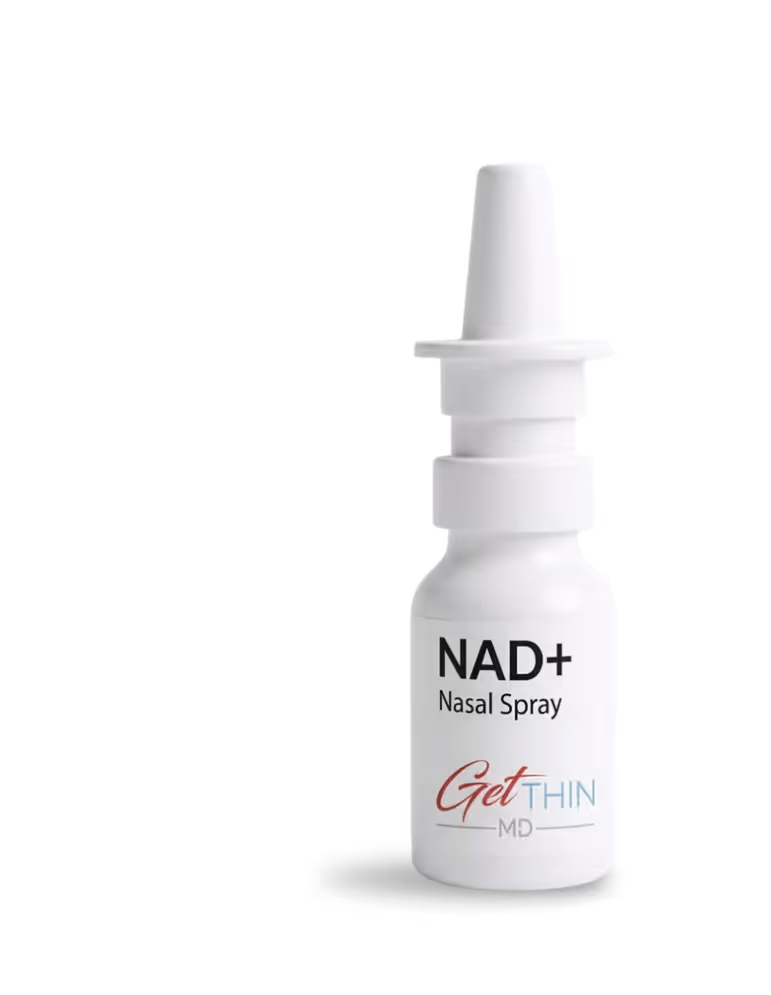
- Nasal spray: a newer delivery method that is still being studied.
The best option depends on your health history, your goals, and what a licensed healthcare provider recommends.
Get Thin MD offers NAD+ as part of its anti-aging and wellness treatments. A licensed healthcare provider reviews your health history before prescribing the medication, and a care team is available to guide you on your NAD+ journey.
When to Talk to Your Licensed Healthcare Provider
NAD+ is not right for everyone. And like any treatment, it works best with proper guidance.
Talk to a licensed healthcare provider if:
- You're feeling unusually tired or low-energy, especially while using a GLP-1 medication.
- You've heard about NAD+ and want to know if it makes sense for your situation.
- You take other medications or have existing health conditions.
- You're not sure which form of NAD+ is right for you.
Ask: "I've been feeling more fatigued since starting my GLP-1. Is NAD+ something that might help?"
Ask: "What's the difference between oral NAD+ and injections?"
Ask: "Is NAD+ safe to take alongside my other treatments?"
Ask: "How long before I might notice a difference?"
For full safety details, visit our Important Safety Information page.
Why Get Thin MD?
Get Thin MD takes a different approach to anti-aging and wellness. You're not just buying a supplement. You get a real care team.
- A licensed healthcare provider reviews your full health history before prescribing anything.
- Dedicated Care Coaches walk you through your treatment, step by step, at no additional cost.
- Get 24/7 support by chat or phone.
- Transparent, flat pricing. No membership fees. No surprise price increases.
Get Thin MD has helped over 60,000 patients nationwide. You're in good hands.
Ready to learn more about NAD+ and what it might do for you? Get started with Get Thin MD today.
[BIG CTA GRAPHIC/BUTTON HERE]
The Bottom Line
NAD+ is a real molecule with real science behind it. It's not magic, but it's not just hype either.
As we age, our bodies tend to produce less of it. That's why researchers are paying close attention.
If you're curious about NAD+, especially if you're managing fatigue, weight changes, or other signs of aging, talk to a licensed healthcare provider. Get Thin MD is here to help you figure out what's right for you.
Important Safety Information
Get Thin connects patients with licensed providers who may prescribe medication through licensed pharmacies. Prescription medication only available if prescribed after an online consultation, as applicable, with a healthcare provider. Physicians may prescribe compounded medications as needed to meet medical necessity or drug shortages. The FDA does not review or approve any compounded medications for safety or effectiveness. Results may vary. Please visit https://www.getthinusa.com/important-safety-information for important safety information.