Why Junk Food Is So Hard to Stop Eating
.jpg)

You open a bag of chips. You tell yourself, just a few. Then the bag is empty. Sound familiar? You're not alone.
Ultra-processed foods (think chips, fast food, sugary cereals) are not made by accident. They are engineered to keep you eating past the point of fullness.
These foods hit your taste buds, your brain, and your hunger hormones all at once. That combo is very hard to fight. "Ultra-processed" means a food has been heavily changed from its original form. It usually has added sugar, salt, fat, artificial flavors, and preservatives.
Research from the NIH on ultra-processed food and overeating shows people eat more calories when their diet is high in these foods, even when they're offered the same amount of food as a less-processed option.
Ultra-processed food cravings aren't a willpower problem. This article explains the science behind it, and practical ways to kick the habit.
Key Takeaways: Why Junk Food is So Addictive
- Ultra-processed foods may be designed to make it easier to keep eating.
- They trigger your brain's reward system (the same one linked to cravings).
- This is not a willpower problem. It's biology.
- GLP-1 medications may help quiet what some people call "food noise."
Ready to take the first step? See how Get Thin MD works.
[BIG CTA GRAPHIC/BUTTON HERE]
The Brain Science Behind Food Cravings
Your brain has a reward system. It releases a chemical called dopamine when something feels good. Dopamine is the "feel good" chemical. It's linked to pleasure, motivation, and habit.
Eating ultra-processed foods can cause a big dopamine surge. Your brain remembers that feeling. Then it wants it again.
This is similar to how other cravings work in the brain. It's not that you lack willpower. Your brain is responding to a very powerful signal.
These foods are sometimes called "hyperpalatable." That means they are made to taste better than almost anything found in nature. They combine salt, sugar, and fat in amounts that do not occur naturally. That combo can be hard for your brain to say no to.
Research on hyperpalatable foods and the brain shows these foods activate the same reward circuits as other habit-forming substances.
How Junk Foods Override Fullness
Your body has a natural system to tell you when you're full. It uses hormones like leptin and GLP-1. Leptin says: "You've had enough. Stop eating." GLP-1 (glucagon-like peptide-1) is released after you eat. It slows digestion and signals your brain to stop.
Ultra-processed foods can disrupt these signals. They are often low in fiber and protein, the things that actually trigger fullness.
They also digest fast. So, the "I'm full" message never comes, or it comes too late.
High-sugar, high-fat foods may reduce how well your body responds to these fullness signals over time. The research points to how the food environment—not just individual choices—shapes our eating behavior.
Eating Too Much Junk Food Isn't a Willpower Problem
If you've tried to cut back on junk food and struggled, you may have blamed yourself. Please don't. The science says otherwise.
These foods are designed by food scientists to be irresistible. Companies spend millions of dollars to find the exact right combination of flavors to keep you reaching for more.
There's even a term for it: the "bliss point." That's the exact ratio of sugar, salt, and fat that makes a food hardest to stop eating.
Your cravings are not a character flaw. They are a normal response to an abnormal food environment. Knowing this is the first step. Once you understand what's happening in your brain, you can start working with your body instead of against it.
Curious about GLP-1 support? See if you qualify.
[BIG CTA GRAPHIC/BUTTON HERE]
How GLP-1s May Help with Junk Food Habits
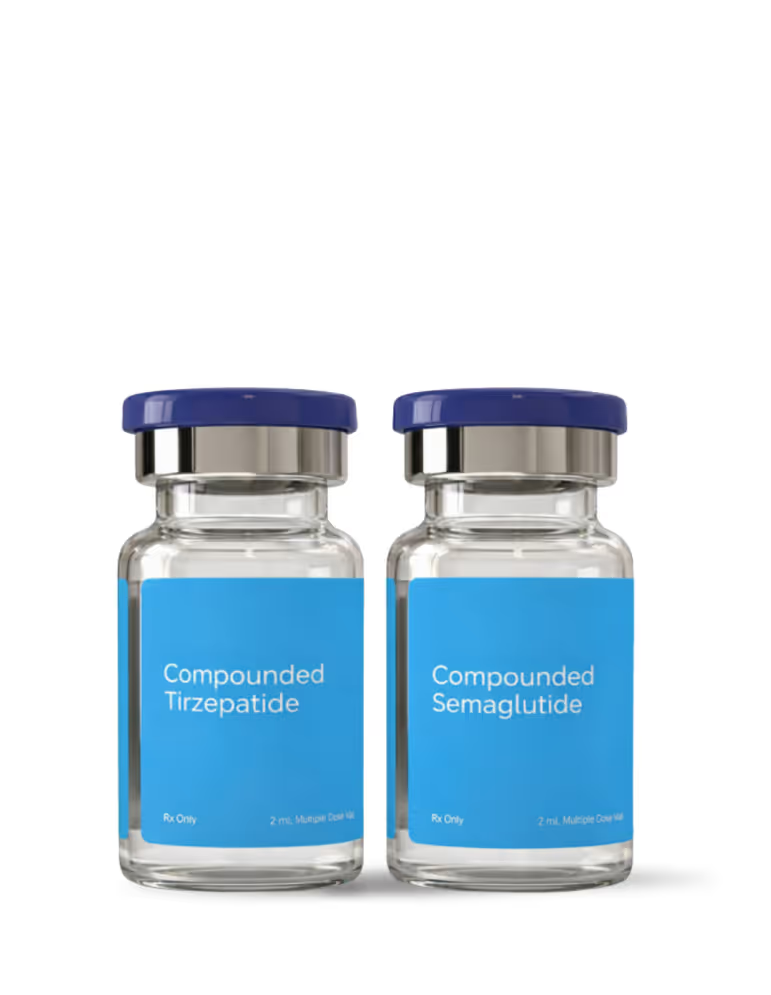
GLP-1 is a natural hormone in your body. It helps control appetite and slow digestion. GLP-1 medications like compounded semaglutide and compounded tirzepatide work by mimicking this hormone.
Many patients say GLP-1 medications quiet what they call "food noise." That's the constant mental chatter about food—what to eat, when to eat, how much.
For some people, this shift is life-changing. Food thoughts become less loud. Cravings feel less urgent. Not everyone has the same experience. But this is one of the most commonly reported benefits among patients on GLP-1 medications.
This does not mean a GLP-1 is right for everyone. A licensed healthcare provider can help you figure out if it's a good fit for your health history and goals.
“I am 1 week in and have noticed, that I do not eat as much. and I am able to stop comfortably and don’t feel unsatisfied. The sugar cravings are subsiding. I am working out an hour a day at least 5 days a week. Feeling great so far.” – Angela B., Get Thin Customer
Practical Ways to Reduce Ultra-Processed Food Habits
You don't have to overhaul your life overnight. Small shifts can make a real difference. Try these simple steps:
- Add protein to every meal. Protein helps you feel full longer.
- Drink water before eating. Thirst can feel like hunger.
- Keep whole foods visible. If it's in front of you, you'll eat it.
- Don't shop hungry. Your brain will steer you toward the snack aisle.
- Eat slowly. It takes about 20 minutes for the 'I'm full' signal to reach your brain.
These habits tend to work best alongside clinical support, not instead of it. Guidance from the CDC on healthy eating habits supports a gradual, sustainable approach to changing what you eat.
When to Talk to Your Licensed Healthcare Provider
If food cravings feel out of control, it's worth talking to someone. A licensed healthcare provider can help you understand what's driving your cravings and what options may help.
Talk to your licensed healthcare provider if:
- You feel like you can't stop eating certain foods, even when you want to
- Cravings feel stronger than usual or are getting worse
- You're on a GLP-1 and wondering if your dose is right for you
- You have questions about side effects, dosing, or what to expect
For full safety details, visit our Important Safety Information page.
Why Get Thin MD
Get Thin MD offers a full care team, not just a prescription. You get access to Care Coaches, Registered Dieticians, and a licensed healthcare provider all in 1 program.
Here's what that looks like:
- A licensed healthcare provider reviews your health history.
- If prescribed, your medication ships discreetly to your door.
- Our Care Coaches check in with you throughout your journey.
- You have affordable, easy-to-schedule access to Registered Dieticians to help you with nutrition support.
- You’ll never see surprise price increases. Your price doesn't go up just because your dose does.
- 24/7 support is always available.
Many patients report feeling supported in a way they haven't experienced elsewhere. Results vary—but the support is real.
See how Get Thin MD can support your journey. Take the quiz.
[BIG CTA GRAPHIC/BUTTON HERE]
The Bottom Line
Junk food is hard to stop because it may be designed that way. It can activate your brain's reward system and overrides your fullness signals. This may be more biology than personal failure.
Understanding what's happening in your body is the first step. Getting the right support is the next one. If you're ready to take that step, Get Thin MD is here to help.
Important Safety Information
Get Thin connects patients with licensed providers who may prescribe medication through state-licensed pharmacies. Prescription medication only available if prescribed after an online consultation, as applicable, with a healthcare provider. Physicians may prescribe compounded medications as needed to meet medical necessity or drug shortages. The FDA does not review or approve any compounded medications for safety or effectiveness. Results may vary. Please visit https://www.getthinusa.com/important-safety-information for important safety information.