Why Building Muscle Helps with Weight Loss
.jpg)

You've been eating less. The scale is moving. But something still feels off. Maybe you feel weaker or you're worried about losing more than just fat.
That's a real concern, and it's worth talking about. Building and keeping muscle can be an important part of long-term weight loss. This article explains why, and how to get started.
Key Takeaways: Why Strength Training Matters for Weight Loss
- Muscle burns more energy at rest than fat does. More muscle may support a higher resting metabolism.
- People on GLP-1 medications may lose some muscle along with fat. Strength training can help you maintain muscle.
- You don't need a gym or heavy weights to start. Simple moves at home count.
- Eating enough protein and moving regularly are the 2 biggest tools for protecting your muscle.
Ready to start your weight loss journey with expert support? See if you qualify.
[BIG CTA GRAPHIC/BUTTON HERE]
What Muscle Has to Do with Weight Loss
Most people think weight loss is about eating less and moving more. That's part of it. But what your body is made of matters just as much as how much you weigh.
When you have more muscle, your body often burns more energy. even while you sleep. This is called your resting metabolism. Think of it as your body's idle speed.
Muscle is metabolically active tissue. That means it uses energy just to exist. Fat tissue uses very little by comparison.
Research from the National Institutes of Health on skeletal muscle and resting energy expenditure found that people with more active muscle tissue had meaningfully higher resting metabolic rates. This difference in metabolism may even play a role in why some people are more prone to weight gain.
The bottom line: more muscle may help your body work harder for you all day long.
How Muscle Helps Your Metabolism
Your metabolism is how fast your body uses energy. A faster metabolism means your body burns more calories, even at rest.
Muscle tissue uses roughly 2 to 3 times more energy at rest than fat tissue does. So, when you build or keep muscle, your body's idle speed goes up.
This matters a lot over time. Even small increases in muscle mass can make it easier to maintain weight loss because your body is doing more work in the background.
Think of it this way: muscle is like a furnace. The bigger the furnace, the more fuel it burns.
Why GLP-1 Users Especially Need Strength Training
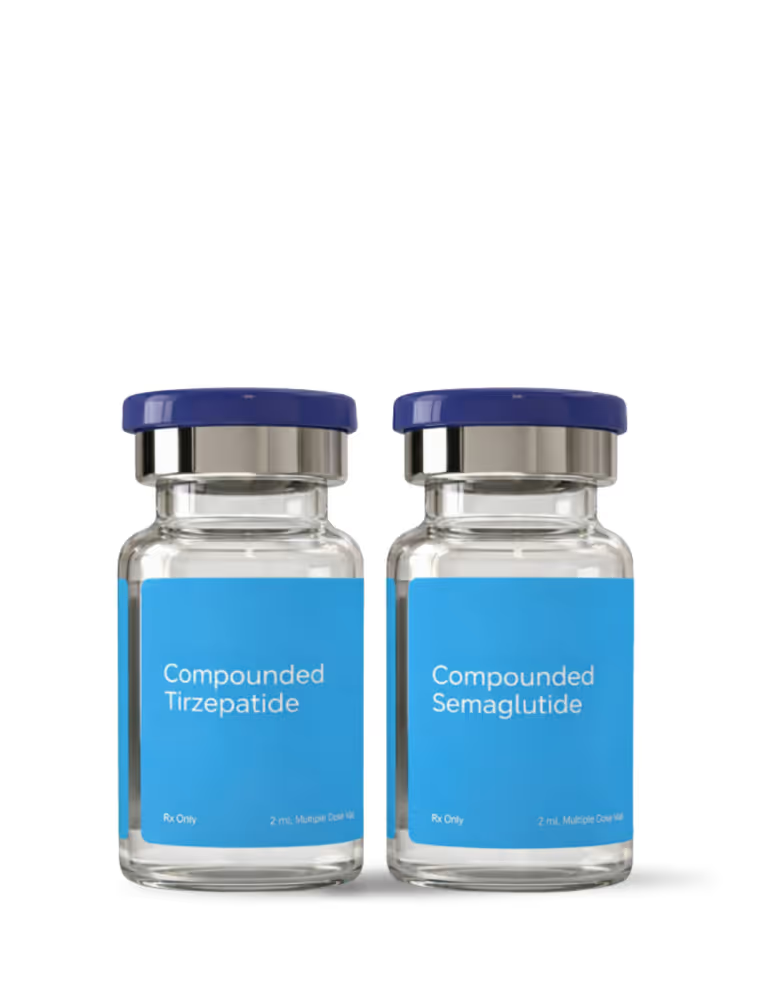
GLP-1 medications like compounded semaglutide and compounded tirzepatide work by reducing appetite.
That means they help many people eat less, which is great for fat loss. But when you eat less, your body can sometimes lose muscle along with fat.
Research has shown that lean body mass can make up 15% to 40% of weight lost during GLP-1 therapy. That's muscle your body needs. The good news is, strength training and protein may help reduce muscle loss.
A review published in Frontiers in Clinical Diabetes and Healthcare found that combining GLP-1 medications with resistance training may be one of the most effective ways to preserve muscle while losing fat.
Strength training sends a signal to your body: keep this muscle. Even light resistance work helps.
- Ask: "What kind of exercise helps preserve muscle while I lose weight?"
- Ask: "How much protein should I be eating while on semaglutide?"
- Ask: "Can I start strength training as a beginner with no gym access?"
Get Thin MD pairs you with a Care Coach and Registered Dietician. See how our program works.
[BIG CTA GRAPHIC/BUTTON HERE]
What 'Building Muscle' Actually Means for Beginners
Building muscle can sound intimidating. It doesn't have to be. For most women just starting out, the goal isn't big biceps.
The goal is to keep the muscle you already have and maybe build a little more.
This is sometimes called body recomposition. It means losing fat while keeping or gaining lean muscle tissue. You don't need to lift heavy. You don't need a gym membership.
What you need is resistance. That can be:
- Your own bodyweight (squats, wall push-ups, modified lunges)
- Light dumbbells or resistance bands
- Household items like water jugs
- A chair, a wall, or a countertop for support
The key is doing something that challenges your muscles. A little discomfort is okay. Pain is not. Start small. Stay consistent. That's how many see results over time.
The Simplest Exercises to Start Building Muscle
Here are some beginner-friendly moves you can do at home:
Lower body:
- Chair squats. Stand in front of a chair. Slowly sit down, then stand back up. That's 1 rep.
- Wall sit. Lean against a wall and bend your knees like you're sitting. Hold for 10–20 seconds.
- Step-ups. Use the bottom step of a staircase. Step up and down slowly.
Upper body:
- Wall push-ups. Hands flat on the wall, shoulder-width apart. Bend your arms and push back. Easier than a floor push-up.
- Overhead press with water bottles. Hold a bottle in each hand. Raise them above your head slowly, then bring them back down.
Core:
- Seated marching. Sit in a chair. Lift one knee up, then the other. Alternate slowly for 30 seconds.
- Standing side bends. Stand with feet shoulder-width apart. Slowly lean to one side, then the other.
Aim for 2 sets of 8–12 reps per move. Rest between sets. It doesn't have to be perfect. It just has to happen.
How Often and How Long Should I Exercise?
You don't need to work out every day. For muscle preservation, aim for 3 days of resistance training per week.
Each session can be as short as 15–20 minutes when you're starting out.
Research supports this. A case series published in PMC on GLP-1 patients and lean mass preservation found that patients who did resistance training 3 to 5 days per week kept—and in some cases, gained—lean tissue while on semaglutide or tirzepatide.
A simple weekly plan for beginners:
- Monday: 15-minute lower body routine
- Wednesday: 15-minute upper body routine
- Friday: Full-body mix or a walk + bodyweight moves
Walking counts too. It's not strength training, but it supports your overall health and keeps you moving on rest days.
The Endocrine Society reports that older women and those eating less protein are at higher risk for muscle loss on semaglutide. If that sounds like you, starting strength training and increasing protein early may matter even more.
Don't Forget Protein
Protein is muscle's building block. When you're eating less food (especially on a GLP-1), getting enough protein matters more than ever.
Protein helps your body repair and keep muscle after exercise.
Good protein sources include:
- Eggs, Greek yogurt, cottage cheese
- Chicken, turkey, fish
- Beans, lentils, edamame
- Protein shakes if food intake is low
Schedule a free consultation with a Registered Dietician to discuss simple nutrition goals that fit your lifestyle. Needs vary based on your weight, age, and activity level, but knowing how much protein is right for you is key to maintaining muscle.
When to Talk to Your Licensed Healthcare Provider
Strength training is safe for most people, but it's always smart to check in first, especially if you're new to exercise.
Talk to your licensed healthcare provider before starting if you:
- Have joint pain, arthritis, or a recent injury
- Have a heart condition or have been told to limit exercise
- Feel unusually weak, dizzy, or tired during activity
- Are unsure which movements are safe for your body
If you notice sudden pain, chest tightness, or shortness of breath during exercise, stop and contact your licensed healthcare provider right away.
Why Get Thin MD
Get Thin MD isn't just about medication. We want you to help you build healthy habits that last.
When you join, you get:
- A licensed healthcare provider who reviews your health history and oversees your care
- Care Coaches who check in with you and help with questions about your medication and routine
- Access to Registered Dieticians to help you with nutrition, including protein goals to protect your muscle
- 24/7 support via chat or phone
- Transparent pricing—your price doesn’t go up just because your dose does.
Many patients report feeling more supported at Get Thin MD than anywhere else they've tried.
“Awesome company! This company does EXACTLY what they claim! Costs never go up regardless of dosage, practitioners are extremely knowledgeable and helpful during your weight loss journey. I have had great success and would recommended Get Thin MD to anyone!”
– Krista J., Get Thin MD Customer
See if you qualify. Your care team is ready when you are.
[BIG CTA GRAPHIC/BUTTON HERE]
The Bottom Line
Muscle isn't just for athletes. It's one of your best long-term tools for weight management. More muscle may support a higher resting metabolism. That means your body works harder for you, even on rest days.
If you're on a GLP-1, strength training may help you keep more of that muscle as you lose fat.
Start simple—2 sessions a week, 15 minutes each. Eat your protein and reach out to your care team—that's what they're there for! Get started on your weight loss journey today with Get Thin MD.
Important Safety Information
Get Thin connects customers with licensed providers who may prescribe medication through state-licensed pharmacies. Prescription medication only available if prescribed after an online consultation, as applicable, with a healthcare provider. Physicians may prescribe compounded medications as needed to meet medical necessity or drug shortages. The FDA does not review or approve any compounded medications for safety or effectiveness. Results may vary. Please visit https://www.getthinusa.com/important-safety-information for important safety information.