Tirzepatide and Menopause: What the 2025 Research Shows for Women Over 50


You are doing everything right. Eating less. Moving more. But since menopause, the scale barely moves.
That frustration is not in your head. Menopause changes how your body stores fat, regulates hunger, and responds to effort. Many weight loss programs were not designed with those changes in mind.
New clinical data confirms postmenopausal women may respond to tirzepatide and that combining it with hormone therapy could be associated with greater weight loss.
A 2025 analysis of more than 2,500 women found that tirzepatide can work for postmenopausal women, with results nearly identical to younger women. This article explains what the research actually shows, what is different about weight loss after menopause, and how Get Thin MD supports you through the process.
Key Takeaways: Tirzepatide Can Help Postmenopausal Women
- Postmenopausal women lost an average of 23% of body weight with tirzepatide in large clinical trials—nearly the same as younger women.
- The same clinical trials showed 97% to 98% of women using tirzepatide achieved at least 5% total body weight loss, compared to 29% to 33% on placebo.
- A 2025 real-world study found adding hormone therapy may be associated with greater weight loss. 45% of women reached 20% or more weight loss with the combination, versus 18% on tirzepatide alone.
- Menopause can change how your body stores fat, but it does not block tirzepatide.
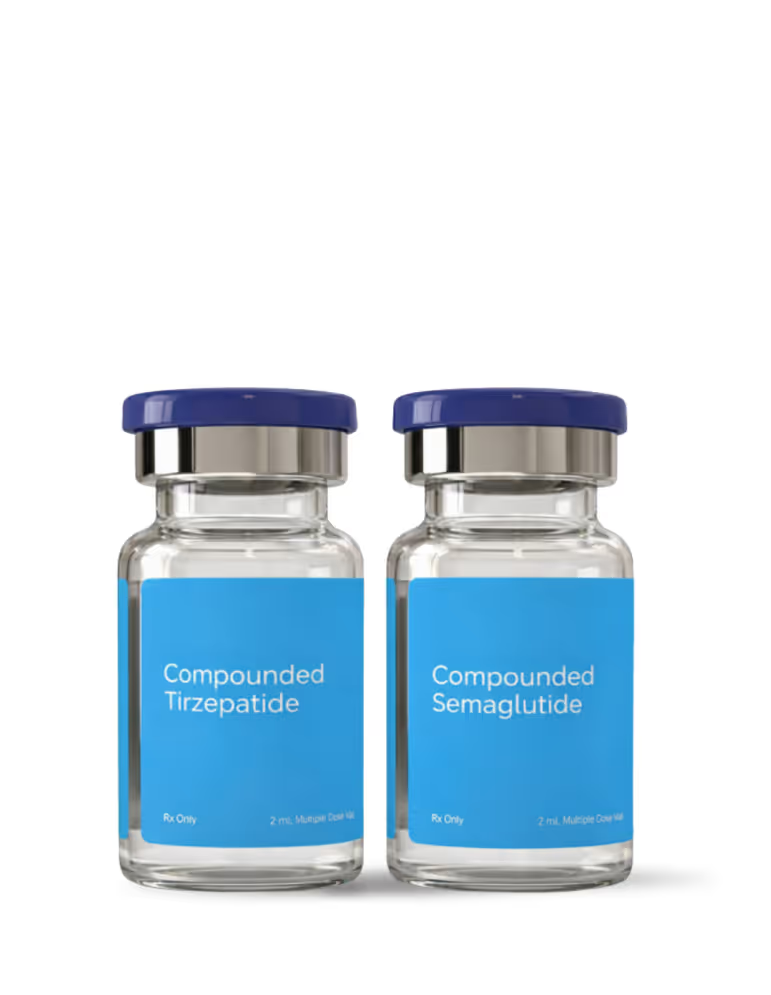
- If prescribed, Get Thin MD customers may receive compounded tirzepatide, along with support from licensed healthcare providers, Care Coaches, and Registered Dietitians. Compounded medications are not FDA-approved and are prepared by licensed pharmacies when appropriate.
Ready to see if compounded tirzepatide is right for you?
[BIG CTA GRAPHIC/BUTTON HERE]
Why Menopause Makes Weight Loss So Much Harder
Your body changes when estrogen declines. Several things happen at once.
- Fat shifts toward the belly. Visceral fat (the kind stored around your organs) tends to increase after menopause, even without weight gain.
- Insulin resistance increases. Your cells become less sensitive to insulin, which can lead to higher blood sugar and more fat storage over time.
- Your metabolism slows. Muscle mass tends to decline with age and hormonal changes, which lowers your resting calorie burn.
- Sleep becomes harder. Hot flashes, night sweats, and hormonal shifts can disrupt sleep. Poor sleep raises cortisol, which can contribute to fat storage.
None of this is your fault. It is biology.
How Tirzepatide Works and Why It Matters After Menopause
Tirzepatide is a weekly injectable medication that activates 2 hormone receptors in your body: GIP and GLP-1.
These receptors help control hunger, slow how quickly food leaves your stomach, and signal your brain that you are satisfied.
This matters after menopause because estrogen affects some of the same appetite and energy pathways. When estrogen drops, hunger signals can become louder and cravings more persistent. Tirzepatide is often used to help quiet them at the biological level.
The result: many people eat less because they genuinely want less food, not because they are fighting through hunger all day. Results vary.
What 2,542 Women Showed in Clinical Trials
Researchers looked at data from 2,542 women across 3 large SURMOUNT clinical trials. They grouped women by reproductive stage: premenopausal, perimenopausal, and postmenopausal.
Here is what they found in the postmenopausal group:
- Average body weight reduction: 23% with tirzepatide vs. 3% with placebo.
- Waist circumference reduction: 20 cm with tirzepatide vs. 4 cm with placebo — a 16 cm difference in belly size.
- 97% to 98% of women using tirzepatide achieved at least 5% total body weight loss. Only 29% to 33% on placebo reached that same threshold. The results across all 3 reproductive stage groups were nearly the same. Menopause did not significantly reduce results.
Important context: these were controlled clinical trials. Real-world results vary based on starting weight, lifestyle, dose, and individual response. Your licensed healthcare provider will review your medical history and determine whether treatment is appropriate.
The Hormone Therapy Connection: What a 2025 Study Found
A 2025 study from Dr. Regina Castaneda and colleagues at Mayo Clinic looked at 120 postmenopausal women using tirzepatide. 40 were also using hormone therapy. 80 were not. They tracked results over a median of 18 months.
Here’s what the study found:
- The group using tirzepatide alone lost about 14% of their total body weight.
- The group using tirzepatide plus hormone therapy lost about 19%.
- 45% of the combination group reached 20% or more total body weight loss compared to only 18% of the tirzepatide-alone group.
This research does not mean hormone therapy is required to see results from tirzepatide. Some people see meaningful weight loss without it. But if you are already using or considering hormone therapy, this is important information to bring to your licensed healthcare provider.
Talk to a licensed healthcare provider about whether compounded tirzepatide is right for your situation.
[BIG CTA GRAPHIC/BUTTON HERE]
What Results May Look Like Over Time
Clinical trial numbers represent best-case outcomes. Real-world results look different for many people. Here is a general sense of what to expect:
- Weeks 1 to 2: Some people notice appetite changes early. Food cravings tend to quiet down, and meals feel more satisfying.
- Months 1 to 3: Many people start to see gradual, steady weight loss. The scale tends to move slowly but consistently.
- Months 3 to 6: Meaningful weight loss often becomes clearer. Energy and physical activity may improve alongside it.
- Months 6 to 18: The 2025 Castaneda study used an 18-month median follow-up. Tirzepatide is a long-term medication, not a quick fix. Sustained results come with sustained treatment.
Many people using Get Thin MD report less mental noise around food, fewer cravings, and a feeling of fullness they did not have before. Results vary.
Get Thin MD customers are not left to figure this out alone. You get unlimited access to Care Coaches throughout treatment, and affordable access to Registered Dietitians who can provide nutrition guidance alongside the medication.
Our Analysis: What 3 Published Data Sets Show
We reviewed 3 published data sources from 2025 and 2026 to understand what the evidence shows across different study designs and populations.
- SURMOUNT randomized controlled trials (Tchang et al., 2025): 2,542 women across SURMOUNT-1, -3, and -4. Postmenopausal group. 23% average body weight loss with tirzepatide vs. 3% placebo. Waist circumference: 20 cm reduction vs. 4 cm. 97-98% achieved >=5% weight loss. Gold-standard trial design.
- Castaneda et al. real-world study (Endocrine Society ENDO 2025): 120 postmenopausal women, 18-month median follow-up. Tirzepatide alone: 14% body weight loss. Tirzepatide + hormone therapy: ~19% body weight loss. 45% vs. 18% reached the 20%-or-more weight loss threshold.
- Lancet Obstetrics, Gynaecology & Women's Health (2026): Peer-reviewed publication of the Castaneda data. Confirmed the hormone therapy advantage. Also showed greater proportions reaching 25% and 30% weight loss milestones in the combination group vs. tirzepatide alone.
What stands out across all 3 sources:
- Postmenopausal women responded to tirzepatide consistently across trial and real-world settings.
- Hormone therapy appears to improve outcomes further. But the Castaneda study was observational—cause and effect are not yet definitively proven.
- The SURMOUNT trial data is the strongest evidence: randomized, controlled, and large enough to separate effects by reproductive stage.
What this means for you: If you have been told that weight loss after menopause is just harder, these numbers suggest the right tools can help. Discuss what combination is right for your health history with your licensed healthcare provider.
Frequently Asked Questions About Tirzepatide for Postmenopausal Women
Is tirzepatide effective for menopause weight loss?
Data from 2,542 women in the SURMOUNT trials showed postmenopausal women lost an average of 23% of body weight with tirzepatide—nearly the same result as premenopausal women. The medication helped lead to significant reductions in weight, waist circumference, and central adiposity regardless of reproductive stage. Results vary.
Can you reduce abdominal fat with tirzepatide?
In the SURMOUNT trials, postmenopausal women reduced waist circumference by an average of 20 cm with tirzepatide, compared to 4 cm on placebo. Visceral belly fat may respond to tirzepatide because the medication targets fat loss broadly, including the midsection. Results vary by individual.
How long does it take to lose weight on tirzepatide after menopause?
Some people notice appetite suppression within the first 1 to 2 weeks. Meaningful weight loss tends to build over 3 to 6 months of consistent treatment. The 2025 real-world study showing 14% to 19% outcomes used a median treatment period of 18 months.
Tirzepatide is often considered a long-term medication. Results tend to come with sustained use, not a short sprint. Your licensed healthcare provider will review your medical history and determine whether treatment is appropriate.
What is the best medication for weight loss during menopause?
There is no single answer for everyone. The 2025 research suggests tirzepatide may be particularly well-matched to the biology of menopause weight gain. If hormone therapy is also part of your care plan, the combination may be associated with greater weight loss.
A licensed healthcare professional will review your full health history before recommending any treatment. Get Thin MD connects you with a provider who does exactly that.
Why Get Thin MD
Get Thin MD is a national telehealth weight loss program. When you start with Get Thin MD, you receive:
- A licensed healthcare provider who reviews your medical history and determines whether treatment is appropriate.
- Compounded tirzepatide dispensed from a licensed pharmacy.
- Unlimited access to Care Coaches for ongoing check-ins and accountability.
- Affordable access to Registered Dietitians who provide nutrition guidance tailored to your appetite, your goals, and your situation.
- Clear instructions on dosing, what to expect, and who to call if you have questions.
Plus, Get Thin MD gives you a team. If prescribed, you will receive everything you need to get started, with support available throughout your treatment.
When This May Not Be Right for You
Compounded tirzepatide through Get Thin MD may not be the right fit if:
- You are currently pregnant or breastfeeding. GLP-1 medications are not recommended during pregnancy.
- You have a personal or family history of medullary thyroid cancer or MEN2 syndrome. These are specific medical contraindications for tirzepatide. Your licensed healthcare provider will screen for these during the consultation.
- You are looking for dramatic results in a short time. Tirzepatide supports gradual, steady weight loss over months. If you want a dramatic drop on the scale within 30 days, this is not that program.
- You are not open to adjusting eating habits. Tirzepatide tends to work best alongside nutritional support. It reduces hunger, but it is not a substitute for paying attention to what you eat.
- You have had significant adverse effects from a GLP-1 medication in the past. Your licensed healthcare provider will review your history and determine whether tirzepatide is appropriate given your experience.
If any of these apply, your licensed healthcare provider is the right first conversation. A good healthcare provider will tell you honestly whether this medication fits.
When to Talk to Your Licensed Healthcare Professional
Talk to your licensed healthcare provider before starting if:
- You currently use hormone therapy. The 2025 research suggests the combination affects outcomes, and your healthcare provider needs your full picture.
- You have thyroid disease, a history of pancreatitis, or kidney disease.
- You take medications that affect blood sugar levels.
Talk to your licensed healthcare provider right away if you experience:
- Severe nausea or vomiting that does not improve after 1 to 2 weeks
- New or unusual abdominal pain
- Vision changes or rapid heartbeat
- Signs of a severe allergic reaction
Ask: "Is tirzepatide a good option for me given my hormone therapy status?"
Ask: "What starting dose makes sense for my health history?"
Ask: "What side effects should I watch for in the first month?"
Ask: "Should hormone therapy and tirzepatide be part of the same plan for me?"
For full safety details, see our Important Safety Information.
See if you qualify for compounded tirzepatide through Get Thin MD.
[BIG CTA GRAPHIC/BUTTON HERE]
The Bottom Line
Menopause can make weight loss harder, but it does not seem to make tirzepatide less effective.
If hormone therapy is already part of your care, a 2025 study suggests the combination may be linked to improved outcomes; causality has not been established.
Get Thin MD connects you with a licensed healthcare provider, Care Coaches, and Registered Dietitians, so you are not navigating this alone.
Important Safety Information
Get Thin connects customers with licensed providers who may prescribe medication through state-licensed pharmacies. Prescription medication only available if prescribed after an online consultation, as applicable, with a healthcare provider. Physicians may prescribe compounded medications as needed to meet medical necessity or drug shortages. The FDA does not review or approve any compounded medications for safety or effectiveness. Results may vary. Please see our Important Safety Information.